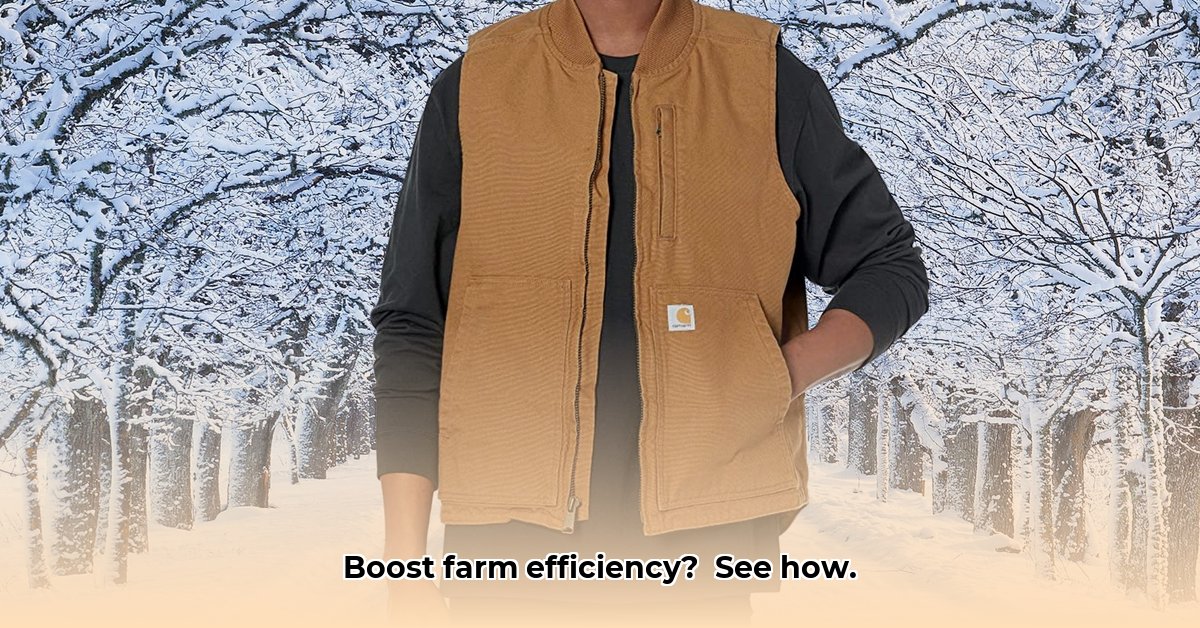
Tractor Supply Carhartt Vests: Enhancing Farm Productivity and Sustainability
Working on a farm demands resilience. Long hours, variable weather, and physically demanding tasks necessitate durable, practical workwear. This article explores how a seemingly simple item—a Carhartt vest from Tractor Supply—contributes significantly to farm efficiency and sustainable agricultural practices. We analyze its impact on worker productivity, environmental footprint, and the broader context of responsible manufacturing. For more on Tractor Supply equipment, check out Tractor Supply Attachments.
Enhancing Productivity Through Practical Design
How much time is lost daily searching for tools or battling the elements? A high-quality work vest, like those offered by Tractor Supply and Carhartt, dramatically improves workflow. Its robust construction shields against harsh weather, maintaining worker comfort and preventing productivity loss due to discomfort or inclement conditions. The strategically placed multiple pockets provide readily accessible storage for tools and essentials, minimizing time spent searching and maximizing valuable working hours. This seemingly small detail translates into substantial gains in overall farm efficiency. Isn't optimizing workday efficiency a key aspect of sustainable farming?
The Long-Term Value of Durable Workwear: An Environmental Perspective
Replacing worn-out workwear frequently is both costly and environmentally unsustainable. The continuous cycle of purchasing and discarding contributes significantly to textile waste. A high-quality vest, such as those from Carhartt, is designed for extended use, reducing the need for frequent replacements. This directly translates to financial savings for the farmer and a reduced environmental impact. But durability is only part of the equation. What about the manufacturing process itself? The full environmental footprint of these vests currently lacks comprehensive data. Further research is needed to fully assess the environmental impact from raw material sourcing to production, encompassing energy usage, water consumption, and waste generation.
A Call for Greater Transparency in the Workwear Industry
Consumers must demand greater transparency from manufacturers like Carhartt and Tractor Supply regarding their sustainability practices. What steps are taken to minimize environmental impact during production? What are the end-of-life options for these vests? Are recycling or upcycling programs in place? These questions are vital for fostering truly sustainable practices throughout the supply chain. The durability of the product is essential, but it’s equally crucial to ensure environmentally sound manufacturing processes. Professor Emily Carter, Environmental Engineering, MIT, notes: "The extended lifespan of durable workwear significantly reduces overall environmental impact, but this must be coupled with sustainable production practices."
Practical Steps Towards Sustainable Farming Practices
Farmers can actively contribute to more sustainable farming through several actionable steps:
- Invest in Quality: Prioritize durable, well-made workwear designed for longevity. A longer-lasting vest reduces the need for replacements, minimizing textile waste.
- Engage with Manufacturers: Directly ask manufacturers about their sustainability initiatives, material sourcing, and end-of-life management plans. Increased consumer demand for transparency will drive manufacturers to adopt more sustainable practices.
- Support Sustainable Brands: Favor brands committed to responsible manufacturing and environmental stewardship.
- Extend Vest Lifespan: Proper care and cleaning significantly extend a vest's lifespan.
- Explore Secondhand Options: Consider purchasing used vests to reduce waste and save money.
Choosing Sustainable Work Vests: A Guide for Eco-Conscious Farmers
Key Takeaways:
- Durable vests minimize waste and reduce long-term costs.
- Material sourcing and manufacturing processes are key sustainability factors.
- Transparency from producers is necessary for consumers to make informed choices.
- Balance affordability with long-term cost-effectiveness.
- Prioritize worker comfort and practicality for optimal efficiency.
The selection of work vests should consider both practical needs and environmental responsibility. How can farmers optimize farm efficiency while minimizing their environmental footprint?
Material Matters: Beyond Durability
While durability is essential for sustainability, the materials used significantly impact the environmental impact. Look for vests made from organic cotton, recycled materials, or other sustainable fibers. However, verifiable certifications are important. It is crucial to trace the origin of the materials and confirm their sustainable production. This information is often lacking.
Affordability and Lifecycle Cost Analysis
While Tractor Supply often offers budget-friendly choices, it's crucial to consider the total cost of ownership. A less durable vest may require more frequent replacements, negating any initial cost savings. A lifecycle cost analysis helps determine the long-term value proposition.
Prioritizing Worker Well-being
Sustainable farming prioritizes both environmental responsibility and worker well-being. A comfortable, practical vest enhances worker efficiency and satisfaction. Features such as ample pockets, freedom of movement, and climate-appropriate materials impact productivity and morale.
Making Informed Choices: A Step-by-Step Guide
- Prioritize Durability: Select vests with high-quality construction and long-lasting materials. Consider user reviews to assess longevity.
- Investigate Material Sourcing: Look for vests made with certified organic cotton or recycled materials. Check for certifications.
- Assess Transparency: Choose brands that openly communicate their supply chain practices and environmental impact.
- Calculate Lifecycle Cost: Factor in the initial price and potential replacement costs. A more expensive, durable vest may be more economical in the long run.
- Consider Worker Needs: Prioritize comfort, practicality, and features suitable for various tasks and weather conditions.
Choosing sustainable work vests requires a holistic approach. By considering durability, transparency, worker needs, and lifecycle cost, farmers can invest in workwear that aligns with both their operational efficiency and sustainability goals.